The Best Journal for Focus: What Actually Works
The Best Journal for Focus: What Actually Works
You've probably bought a planner before. Maybe more than one. They come with habit trackers, goal sheets, and forty-seven sections you'll never fill in. And within two weeks, they're collecting dust on your desk.
The best journal for focus isn't the one with the most features. It's the one that removes the friction between intention and action — and keeps removing it on the days you don't feel like showing up.
The Problem With Most Focus Journals
Most productivity journals are designed for people who already have their attention under control. They track gratitude, affirmations, sleep scores, water intake, mood ratings, and weekly intentions. That's not a focus system — that's a data collection project disguised as self-improvement.
The men who struggle with focus don't need more things to track. They need fewer decisions to make. Every extra box you're supposed to tick is one more reason to skip the journal entirely. Complexity that looked useful in the store becomes a daily source of friction.
Why More Features Usually Mean Less Output
Here's the trap: a journal that looks comprehensive feels productive to buy. It signals that you're serious. But complexity is the enemy of consistency — and consistency is the only thing that compounds.
A morning routine built for autopilot always beats one that requires fifteen minutes of setup and mental negotiation before your first coffee. The same is true for journaling. If opening it feels like work — if you have to remember which section comes first, which prompt to skip, which tracker you haven't updated in a week — you won't open it on the days when it counts most.
The best journal for focus has one job: get you to the page fast, and get you out of your head faster.
What the Best Journal for Focus Actually Needs
Three things. Not ten. Not a system that requires a tutorial to explain.
1. A daily priorities section — and nothing else for the morning.
The first thing you write should be your three most important tasks for the day. Not ten. Not a ranked goal breakdown with sub-bullets. Three. The constraint is the point. When you're forced to choose, you're forced to think. That single decision — made the night before, not scrambled together mid-morning — sets the direction for everything that follows.
2. An evening reflection prompt.
The best journal isn't just forward-facing. It closes the loop. Without a short review at the end of the day — what moved, what didn't, what tomorrow needs — you repeat the same broken patterns in a different calendar week. Five minutes of honest reflection compounds faster than any goal-setting exercise. Most systems only plan. The ones that work also review.
3. A 90-day cycle with no fixed dates.
Not a month. Not a year. 90 days is long enough to build real momentum and short enough that every week carries actual weight. You feel the end approaching. That creates urgency that a yearly planner never does. An undated format matters too: if you miss a day, you don't skip a page — you just continue. No visual record of failure. No psychological exit ramp built into the structure.
5 Things to Check Before You Buy
1. It stays open flat.
Lay-flat binding sounds like a minor detail. It's not. If your journal closes while you're writing, you stop writing. The physical format either supports the habit or fights it — and small daily friction compounds into abandonment faster than you'd expect.
2. The paper handles a pen without bleeding through.
Cheap paper bleeds. The distraction of ink showing on the next page is minor on day one. By week two, it becomes a reason not to write at all. 100gsm minimum if you write with anything heavier than a ballpoint. The tactile experience matters — paper that feels cheap trains your brain to treat the habit as cheap.
3. It has no pre-printed dates.
Undated structure removes the guilt of missed days. A journal that marks your failures by the blank pages you skipped is a journal that trains you to quit. Undated means you set the pace. The system bends to your life instead of indicting it.
4. No lifestyle coaching embedded in the pages.
Affirmations, daily inspiration quotes, and "rate your energy 1–10" prompts are fine for some use cases. For men who need execution, they're noise. The journal should be a workspace — lean, focused, without an opinion about how you should feel about your morning.
5. Portable enough to use anywhere.
A5 fits in a bag. A journal that only works on your home desk is a system that breaks every time life doesn't cooperate — which is exactly when you need it most. If it's too large to travel with, it stays home. And a habit that only works in one environment isn't a habit at all.
Start with the foundation first.
Before investing in a journal, understand the system behind it. I put together a free guide — 7 rules that replace motivation with structure. No habit tracker required.
Get the Free Guide →The Tool Doesn't Replace the System
No journal will save you from a broken approach. If you don't understand why motivation fails — and what actually replaces it — then even the best tool becomes another abandoned habit sitting on your bookshelf.
The journal is the container. Structure is what you put in it. Get clear on the system first: daily priorities, evening review, 90-day cycles. Then the journal becomes the daily point of contact with that system — not a substitute for having one.
Most men buy the journal hoping the tool will fix the behavior. It won't. But once the behavior exists, the right journal makes it faster, cleaner, and harder to break.
The Bottom Line
The best journal for focus isn't the most ambitious one on the shelf. It's the one you'll open every morning without hesitation, fill in without friction, and close every evening knowing the day was spent on what actually mattered.
Simple structure, executed daily, beats a complex system executed twice a month — every single time.

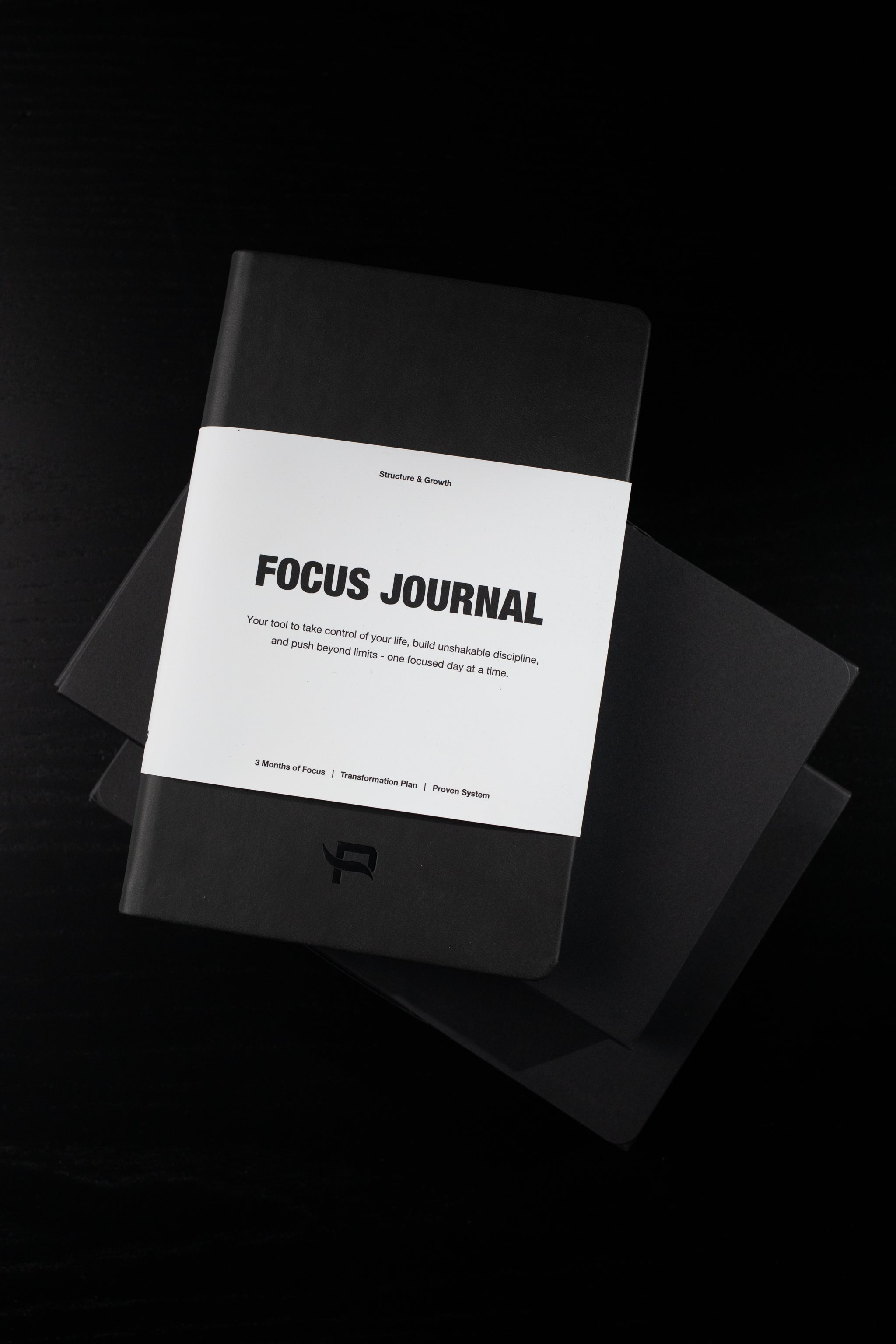
The PrimeFlow Focus Journal
90 days · Daily priorities · Weekly review · Evening reflection
A5 · Lay-flat · 100gsm · Vegan leather softcover · €37
Get Your Journal — €37 →