The Dopamine Detox Journal: Reset Your Focus in 7 Days
The Dopamine Detox Journal: How to Reset Your Focus in 7 Days
The phone never stops. And neither does the noise in your head.
You've scrolled the feed. You've checked the app. You've read a dozen things and retained none of them. By noon, your brain is already full — of nothing that matters. That's not laziness. That's what overstimulation does to a focused mind.
The Problem No One Diagnoses Correctly
Every scroll, every notification, every 15-second video — each one is a small dopamine hit. Fast, free, effortless.
Your brain doesn't care that none of it moves your life forward. It only knows the reward came fast. After enough micro-hits, slow payoffs stop registering. Finishing a difficult task, writing a full page, solving a real problem — these feel less rewarding than they used to. Not because you've changed. Because your brain recalibrated its baseline.
This is why you sit down to work and open a browser tab instead. Not out of weakness — out of conditioning. Your attention system has been trained to expect a faster reward than deep work can deliver.
The men who struggle most with focus aren't the least disciplined. They're the most stimulated.
Why Willpower Doesn't Reset It
Most men try to out-muscle the problem. They commit to no-phone mornings and fail by Tuesday. They delete an app and reinstall it by Friday. They set a timer for focused work and spend the first 20 minutes resisting the urge to check something.
This isn't failure. It's the wrong tool.
Willpower operates on a fixed budget. Each act of resistance depletes it. By the third temptation of the day, the budget is gone — and your environment wins by default. You can't fight a neurological pattern with gritted teeth alone.
What actually resets overstimulation is structure that removes the decision entirely. If the phone isn't in the room, you can't check it. If your first action every morning is writing — not scrolling — your brain gets a different opening signal. The pattern breaks not through deprivation, but through replacement.
What a Dopamine Detox Journal Actually Does
A dopamine detox journal is not about punishing yourself. It's about redirecting your attention toward things that require real effort — and letting your brain re-learn what a meaningful reward feels like.
Writing in a physical journal forces single-threaded focus. You can only write one thing at a time. There's no notification mid-sentence. No algorithm on a blank page. The act itself is the interruption of the loop.
More importantly, a journal gives your brain the slow reward it forgot how to feel. You write a priority. You execute it. You close the loop. That sequence — intention → execution → completion — is the exact pattern overstimulation destroys. Rebuilding it is how your attention resets.
This is also why a paper journal works when apps don't. The structured journal system — daily top-3, evening reflection, weekly review — isn't complex. But it's tactile, distraction-free, and forces a rhythm the phone never could.
5 Rules for a Dopamine Detox Journal Practice
1. Write before you open anything. The first thing you interact with in the morning sets your neurological baseline for hours. Before the phone, before the laptop — write three things you intend to do today. Your brain hasn't been hijacked yet. Use that window.
2. Keep the journal off-screen. A notes app is not a journal. The screen is part of the problem. Physical paper breaks the dopamine loop by placing a real boundary between intention and distraction. You can't accidentally open Instagram while writing in a notebook.
3. Name what drained you each evening. At the end of the day, write one line: what consumed the most mental energy today? Not what you accomplished — what you let in. After 10 days, the patterns become impossible to ignore.
4. Rate your focus, not your output. On a scale of 1–5, how focused were you during deep work today? This single number builds self-awareness faster than any productivity framework. The correlation between morning routine and focus score becomes visible within two weeks. Once you see it, you can't unsee it.
5. Commit to 7 days — not a lifetime. A detox implies a time-bound reset, not permanent deprivation. Seven days of this practice shifts your baseline without requiring a permanent lifestyle overhaul. After seven days, slow work starts feeling satisfying again. That's the signal the reset worked.
The 7 rules that replace overstimulation with structure.
It's free. No email course. Just the foundation behind the journal system — and a way to start before you buy anything.
Get the Free Guide →The 7-Day Reset Is Not a Trick
The reason this works isn't mystical. When you remove fast dopamine from your morning and replace it with a structured writing practice, your brain experiences a reward — just a slower one. Over 7 days, slow rewards start competing again. The work starts feeling worthwhile before it's finished.
That's the shift. Not motivation returning. Reward sensitivity recalibrating.
If you've ever felt like you can't concentrate the way you used to — you're probably right. The environment changed. Your baseline followed. A dopamine detox journal is how you change it back.
Read more on why motivation doesn't work — and why structure is the only replacement that lasts.

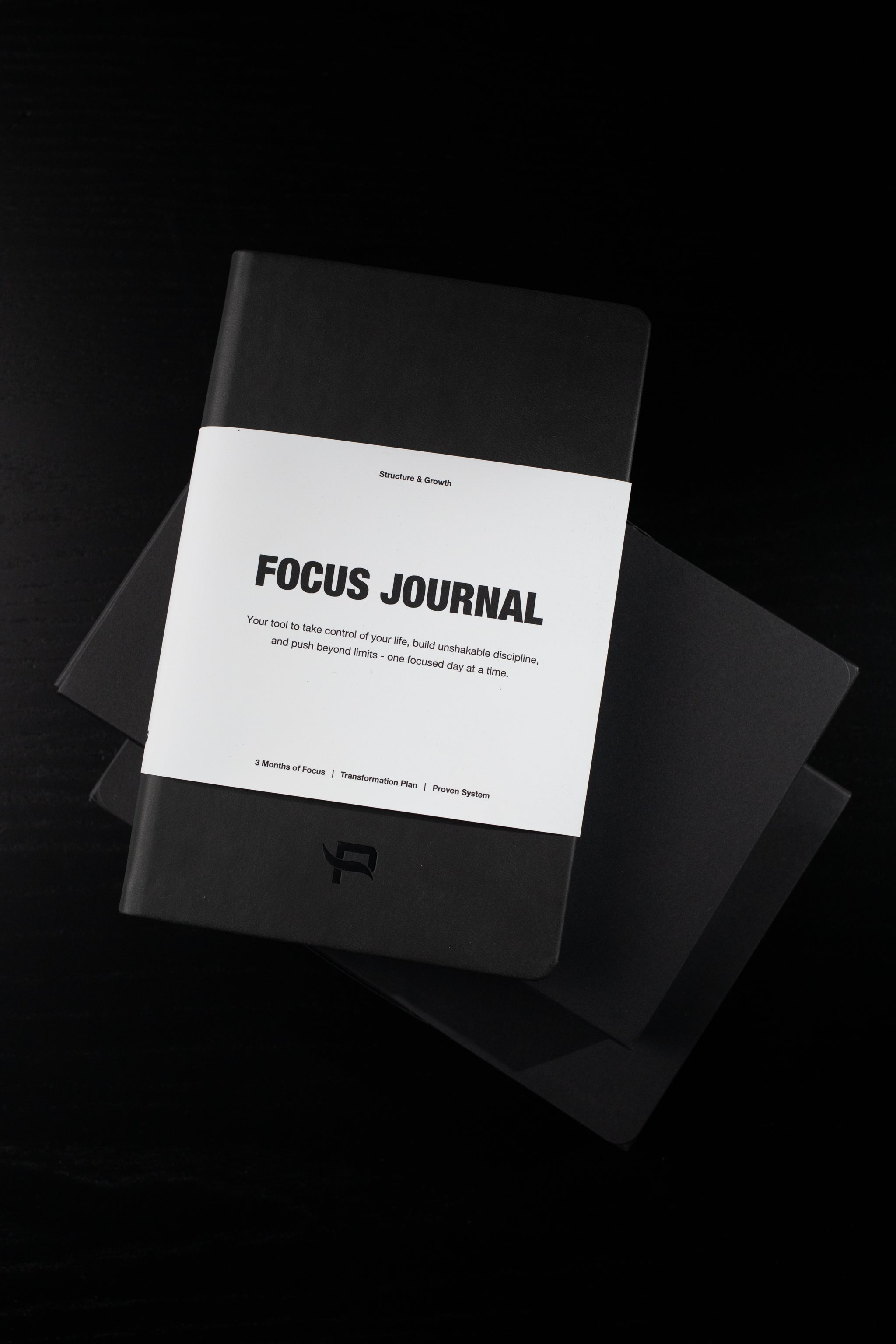
The PrimeFlow Focus Journal
90 days · Daily priorities · Weekly review · Evening reflection
A5 · Lay-flat · 100gsm · Vegan leather softcover · €37
Get Your Journal — €37 →