Structure Over Goals: Why Systems Beat Willpower
Goals feel powerful. They clarify direction, create excitement, give you something to point at.
Then three months pass and the goal is still on the page, largely untouched. Not because you forgot about it. Not because you stopped caring. But because the goal never told you what to do on a Tuesday morning when you're tired and your inbox is full.
Systems do. That's the difference.
The Problem With Goal-First Thinking
Goal-setting culture treats goals as the primary unit of change. Write the goal clearly, review it often, stay motivated by the outcome. The assumption is that a compelling goal generates enough sustained energy to carry you from intention to execution over months.
It doesn't.
Motivation is context-dependent. It spikes when you set the goal, dips when the novelty wears off, collapses under pressure. By the time the goal needs the most effort — the difficult middle phase where progress is real but invisible — motivation is often at its lowest. And a goal without a system has no answer for that phase.
A goal tells you where to go. A system determines whether you ever get there.
Why Willpower Is a Terrible Strategy
Willpower is the most overhyped resource in productivity culture. It's finite, variable, and degrades under stress — exactly the conditions where you need it most.
The man who relies on willpower is always fighting his environment, his defaults, his impulses. He wins some days and loses others. Over time, the wins and losses balance out, and nothing changes.
The man who builds systems changes the environment itself. The defaults are replaced. The impulses have fewer triggers. Willpower isn't required because the system has made the right action the easiest action. He's not stronger — he's built a better track.
What a System Actually Is
A system is a set of predetermined decisions that run automatically.
When you write your three priorities the night before, that's a system. You don't decide what to do in the morning — you execute what evening-you decided. When you do a weekly review every Sunday, that's a system. You don't drift through the week hoping things go well — you correct course with data.
A system removes the variable of mood from the equation. It doesn't ask whether you feel like it. It asks whether you showed up.
The components of a minimal viable productivity system: a daily priority protocol, a weekly review, and a 90-day planning cycle. Three layers. Each one catches what the others miss.
5 Principles of Structure That Beats Willpower
1. Decide in advance, always.
The most dangerous moment for willpower is the moment of decision under pressure. Remove that moment. Decide your three daily priorities the night before. Decide your weekly focus on Sunday. Decide your 90-day outcomes at the start of the cycle. When the moment comes to execute, the decision is already made.
2. Reduce optionality.
Choice is a drain. The man with forty possible ways to spend his morning will spend his morning deciding. The man with a fixed protocol just runs the protocol. Structure eliminates the paralysis of infinite options.
3. Make the system visible.
A system that lives in your head isn't a system — it's an intention. Write it down. A physical journal keeps the system honest. You can see your streak, your reviews, your gaps. The system only works if you can see it working (or not working).
4. Build recovery into the system.
Every system needs a contingency for disruption. What happens when you miss a day? When a week falls apart? The system should have a "reset" protocol: one missed day triggers the minimum version. One hard week triggers the weekly review a day early. Structure anticipates failure — it doesn't pretend failure won't come.
5. Measure the system, not just the outcomes.
Outcomes are lagging indicators. They tell you what happened months after the system ran (or didn't). Measure the leading indicators — did you run your daily protocol today? Did you do the weekly review? These are the signals that predict outcomes before the outcomes appear.
Want the full system in one place?
I put together a free guide — 7 rules that replace motivation with structure. The foundation behind everything on this blog.
Get the Free Guide →The Long Game
Goals keep you pointing in the right direction. Systems keep you moving.
The man who sets a goal without a system will make progress in bursts and lose ground in between. The man with a system — even an imperfect one — makes slower but compounding progress. There are no dramatic reversals, no "I need to restart" moments. Just the steady, unremarkable accumulation of days where the system ran.
Over a year, those two men are not in the same place.
Stop building motivation. Start building architecture.

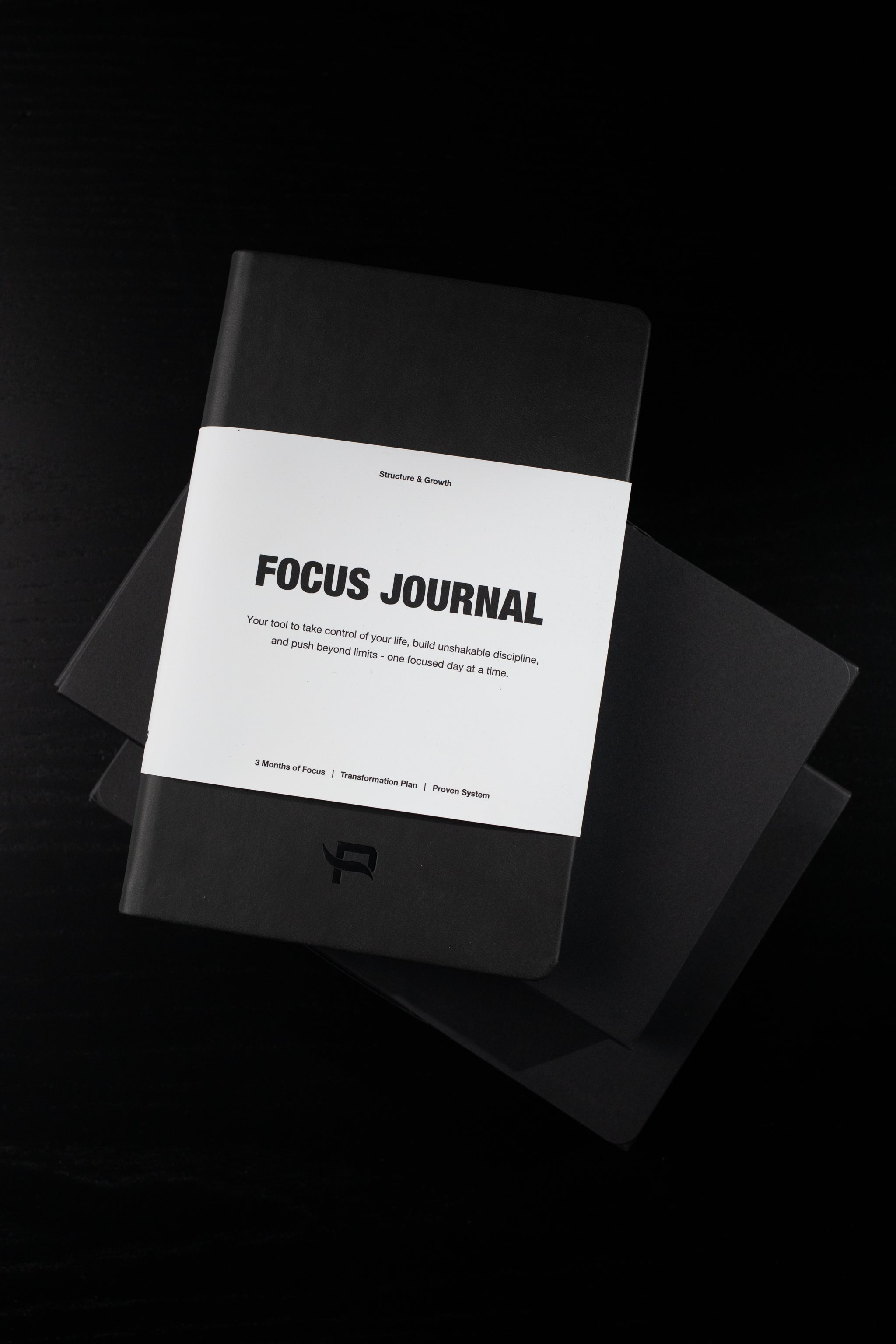
The PrimeFlow Focus Journal
90 days · Daily priorities · Weekly review · Evening reflection
A5 · Lay-flat · 100gsm · Vegan leather softcover · €37
Get Your Journal — €37 →