How to Be More Consistent When Motivation Runs Out
You don't have a consistency problem. You have an architecture problem.
Every man knows what consistency feels like in the first week — the clarity, the follow-through, the sense of being on track. Then week two arrives. Life creates friction. One missed day becomes two. The routine collapses and you're back at the start, wondering what went wrong.
Nothing went wrong with your character. Your system wasn't built to handle the friction.
Why Consistency Breaks Down
Consistency doesn't fail because you stop caring. It fails because the system requires motivation that isn't always there.
Most routines are built on best-case assumptions: you have time, you slept well, nothing urgent appeared. When reality deviates from the best case — and it always does — there's no fallback. The system breaks at the first disruption because it was never designed to survive one.
There's also the compound effect of missed days. One missed day is recoverable. Two starts to feel normal. By the third, you're no longer someone who "does the thing" — you're someone who "used to do the thing." That identity shift happens faster than most men realize.
The Consistency Trap: Relying on Feeling Ready
Here is the exact failure pattern: you wait to feel ready before you execute.
On the days you feel motivated, you perform. On the days you don't, you negotiate. You tell yourself you'll do it tomorrow, when conditions are better. Conditions are never consistently better. So the gaps multiply.
Consistency doesn't require feeling ready. It requires a system that runs regardless of how you feel. The distinction sounds simple. The implementation is everything.
How to Build Structural Consistency
The structural fix for inconsistency operates on three levels: reduce the entry cost, build in a minimum viable version, and track honestly.
Reduce the entry cost means making the habit as easy to start as possible. The journal is already open on your desk. The shoes are already by the door. The playlist is already queued. Every reduction in startup friction is a reduction in the probability of skipping.
The minimum viable version is the compressed form of the habit you do on hard days. Not the full version — a version that keeps the streak alive. Five minutes of journaling instead of twenty. A ten-minute walk instead of a forty-minute run. The minimum version isn't failure. It's the insurance policy that keeps the streak running.
Honest tracking means writing down what you actually did — not what you planned. The gap between plan and execution is data. When you see it clearly, you can adjust. Most men track their plans but not their reality, which means the same gaps repeat indefinitely.
6 Rules for Lasting Consistency
1. Define your minimum version in advance.
Before the week starts, write down the minimum acceptable version of each key habit. The full version is the goal. The minimum version is what keeps the streak alive on the days the full version isn't possible. Having it written makes the decision automatic.
2. Never miss twice in a row.
One missed day is a blip. Two is the beginning of a new pattern. Make it a firm rule: one miss is allowed. Two in a row is not. This single constraint does more for long-term consistency than any motivational strategy.
3. Reduce friction before you need willpower.
Structure your environment the night before. Journal on the desk, not in a drawer. Training clothes laid out, not stuffed in a wardrobe. The morning version of you will have less willpower than the evening version. Help him out.
4. Anchor the habit to an existing behavior.
New habits succeed when attached to existing ones. "After coffee, I write my three priorities." "After training, I log the session." Anchoring removes the decision of when. The existing behavior triggers the new one automatically.
5. Track streaks, not outcomes.
In the early phases of building consistency, don't track how well you performed — track whether you showed up. A streak of 30 consecutive days of journaling is more valuable than 15 perfect journaling sessions with 15 gaps in between. Presence before performance.
6. Review the week honestly every Sunday.
What ran consistently? What broke down? What was the trigger for the breakdown? The Sunday review is where consistency problems get solved — not in the moment they occur. Consistent action requires consistent reflection.
Want the full system in one place?
I put together a free guide — 7 rules that replace motivation with structure. The foundation behind everything on this blog.
Get the Free Guide →The Man Who Shows Up When It's Hard
Most men show up when they feel like it. The man who builds something shows up when he doesn't.
That's not a personality trait — it's an architecture outcome. He's removed the excuses by reducing the friction. He's kept the streak alive with the minimum version. He's reviewed and adjusted enough times that the system now works with him instead of against him.
Consistency isn't something you feel. It's something you engineer. Build the right system, and showing up becomes the path of least resistance — even when motivation is nowhere in sight.

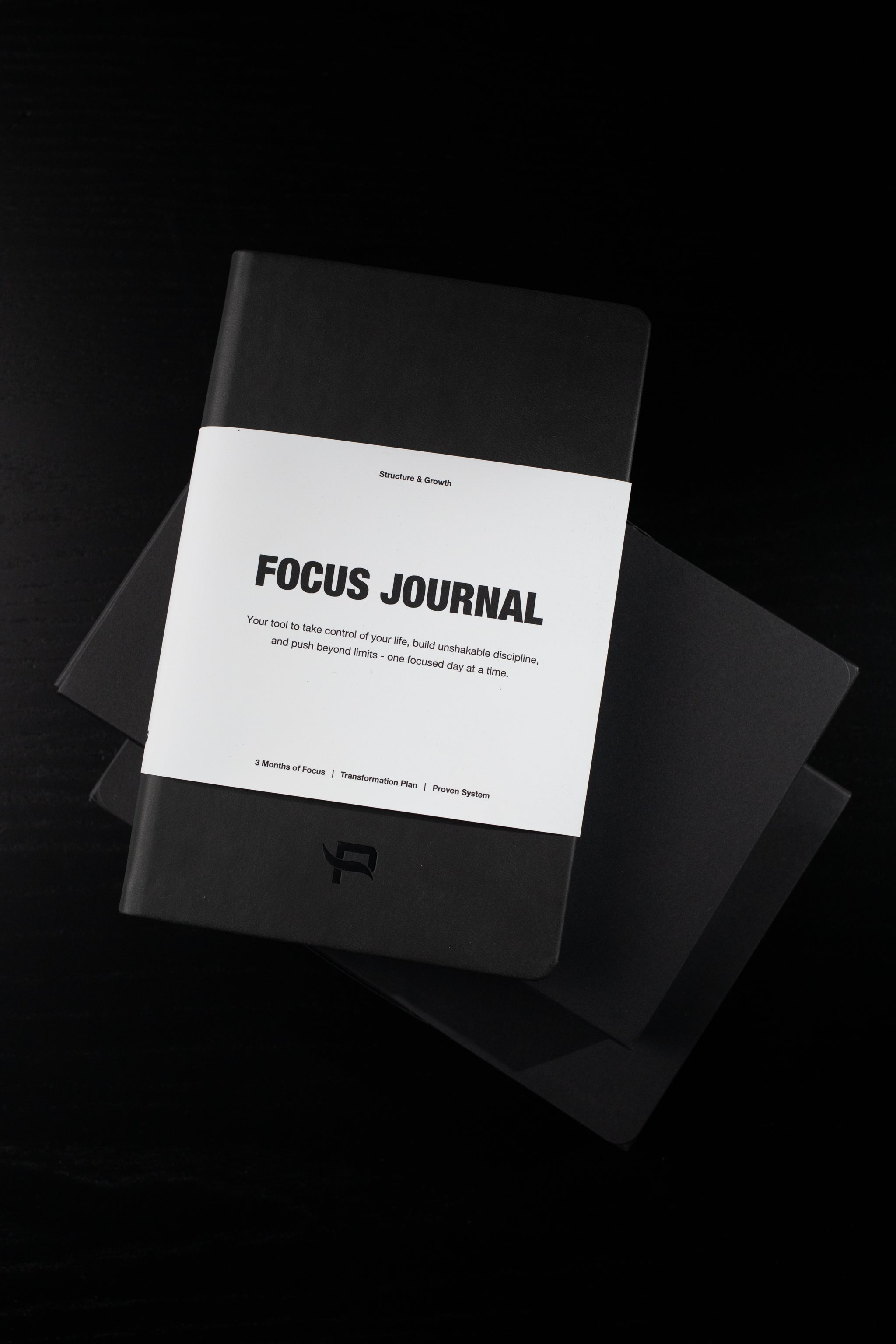
The PrimeFlow Focus Journal
90 days · Daily priorities · Weekly review · Evening reflection
A5 · Lay-flat · 100gsm · Vegan leather softcover · €37
Get Your Journal — €37 →