Why Men Who Journal Outperform Those Who Don't
Most men have written off journaling before they've tried it seriously.
It sounds like something you do in a diary at age fourteen — feelings, impressions, things you're grateful for. Not something that applies to building a business, hitting performance targets, or executing a plan that matters.
That's the misconception. Because the men who journal aren't documenting their emotional landscape. They're running a performance system. And the gap it creates is significant.
What Journaling Actually Is for Men Who Use It Correctly
Used properly, a journal is not a record of feelings. It's a decision support tool.
It holds your priorities so you don't keep them in your head. It records your actual output versus your plan — so you can see where the gap is, not just feel vaguely like you could have done more. It captures the weekly pattern of what advances your goals and what consumes your time without return.
A man who journals consistently has a data set on himself. He knows which mornings are his sharpest, which tasks he avoids and why, which weeks derailed him and what the trigger was. That data is the foundation of genuine self-improvement — not the hope that this week will somehow be different. The right journal structure makes all the difference.
Why Not Journaling Feels Fine (But Isn't)
The problem with not journaling is invisible.
If you don't write your priorities down, they live in your head as a vague mental pressure. You think about the important tasks throughout the day without executing them. By evening, the important things are still undone and the urgent things filled the day.
If you don't review your week, the same patterns repeat. The same time drains. The same avoidance of the same tasks. Without a record, there's no diagnostic. And without a diagnostic, there's no fix.
The man who doesn't journal isn't obviously broken. He's just repeating slightly more than the man who does. Over a year, that repetition compounds into a significant performance gap.
What Men Who Journal Are Actually Writing
It's not stream of consciousness. It's not gratitude lists. It's a structure.
Three priorities in the morning — written in under five minutes. What are the three things that, if done today, would make the most progress toward my current 90-day goal? Rank them. Execute in that order.
An evening reflection — also under five minutes. What got done. What didn't. What the specific obstacle was. What one thing tomorrow needs to go differently. This is not emotional processing — it's operational debrief.
A weekly review — 15 to 20 minutes, once per week. What moved forward this week? What stalled? What consumed time that produced nothing? What's the most important project for next week? This is the layer that catches drift before it becomes a problem.
That's the complete system. Three elements, 20 minutes per day at most. The return on that investment is compounding and permanent.
6 Reasons Men Who Journal Build a Performance Edge
1. They operate from intention, not reaction.
A written daily plan means your day is shaped by your choices, not by whoever contacts you first. Most men's days are built by their environment — emails, notifications, requests. The journaling man's day is built by his journal entry from the night before.
2. They catch their own patterns.
Patterns — good and bad — are invisible inside a single day. They only appear over time, in a record. The man with three months of daily journal entries can see exactly where his weeks break down. That visibility is the first requirement for change.
3. They don't carry the day in their heads.
Mental clutter degrades cognitive performance. Every task you need to remember, every worry you're holding, every unresolved decision occupies working memory. Writing it down clears the cache. The man with a journal thinks more clearly because his head isn't doing storage duty.
4. They learn faster from their own experience.
Without reflection, experience doesn't automatically convert to learning. You can have the same failure 50 times and not extract the pattern. A five-minute evening reflection converts raw experience into usable insight. Journaling accelerates the feedback loop.
5. They stay aligned to long-term goals under short-term pressure.
The urgent always threatens to crowd out the important. A daily priorities protocol, anchored to a 90-day goal, keeps long-term targets visible even when the week is chaotic. The man without it gets eaten by urgency.
6. They show up more consistently.
Tracking creates accountability. A streak of checkmarks creates a reason not to break the streak. Consistency doesn't feel abstract when there's a visible record of it. The journal makes the streak real.
Want the full system in one place?
I put together a free guide — 7 rules that replace motivation with structure. The foundation behind everything on this blog.
Get the Free Guide →The Real Question
The question isn't whether journaling is for you. The question is whether you're operating without data on yourself.
If you don't have a record of your priorities, your outputs, your patterns, and your weekly progress, you're navigating without instruments. You'll make decisions based on how you feel on a given day rather than what the record shows.
The men who perform at the highest level over the long term aren't necessarily more talented. They know themselves better — because they've been watching and recording and adjusting for longer.
That starts with a journal. Opened every morning. Written every evening. Reviewed every week.

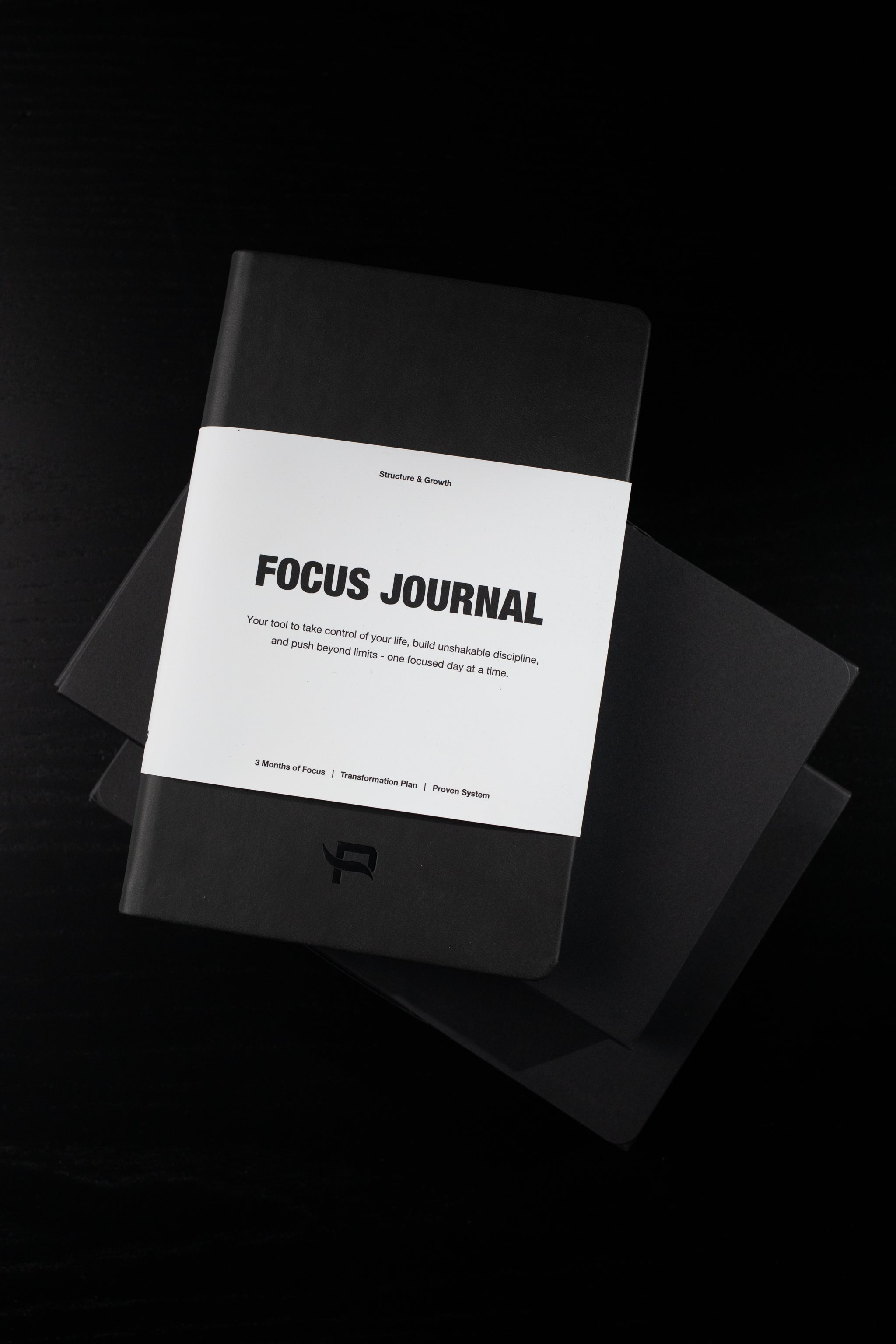
The PrimeFlow Focus Journal
90 days · Daily priorities · Weekly review · Evening reflection
A5 · Lay-flat · 100gsm · Vegan leather softcover · £32 / €37
Get Your Journal — £32 / €37 →Keep reading: Planning & Journaling
- The 90-Day Planning Method That Builds Real Momentum
- Best Journals for Men in 2026: 5 Options Compared Honestly
- The Structured Journal System That Builds Real Consistency
- The Best Productivity Journal for Men — What to Look For
- Why You Lose Focus (And How to Fix It for Good)
All guides in one place: The PrimeFlow Guide Library · What real customers say: PrimeFlow reviews