The Best Productivity Journal for Men — What to Look For
Most productivity journals are not built for the man who needs execution over inspiration.
They're built for the person who wants to feel productive. Gratitude prompts. Affirmation spaces. Pages for mood tracking and weekly reflections on what made you smile. That's fine for some people. But if your problem is translating intention into output, a gratitude journal makes the problem worse — it creates the feeling of progress without any of the substance.
Here's what a productivity journal for men who want real results actually needs to do.
The Problem With Most Journals on the Market
Journals fail for one of two reasons: too much free space or too much imposed structure.
Pure blank notebooks offer no framework. You stare at the page, wondering what to write, and either fill it with rambling or don't open it at all. Without structure, there's no system. Without a system, the journal becomes a record of good intentions.
Over-structured journals swing the other way. They're so prescriptive — twelve specific prompts per day, elaborate weekly rituals, color-coded habit trackers — that the journaling itself becomes the task. You spend more time on the system than on executing the things the system is supposed to support.
A great productivity journal removes decision-making without taking over your morning.
What the Right Journal Actually Does
A productivity journal for serious men needs to answer three questions every day: what are the most important things to do today, what actually happened, and what needs to adjust tomorrow.
That's the complete loop. Intention → execution → reflection → adjustment. Everything else is optional.
The daily section should take five to ten minutes maximum — not because reflection isn't valuable, but because the journal is a tool, not a destination. The man who spends 45 minutes journaling every morning and never executes has optimized the wrong thing. Men who journal correctly outperform those who don't precisely because journaling stays lean.
What to Look For in a Productivity Journal
1. Daily priority structure — not a to-do list.
The journal should prompt you to identify your top one to three priorities, not list every task. A to-do list tracks everything. Priorities track what matters. There's a significant difference in how each affects your day.
2. Evening reflection — not just morning planning.
Most journals only face forward. The best ones include a brief evening review: what got done, what didn't, why. This five-minute check prevents the same bad week from repeating. One-directional planning without reflection is just optimism.
3. Weekly review built into the structure.
A week-by-week review page prompts you to zoom out: what moved forward this week, what got ignored, what the next week needs. Without a weekly layer, daily execution has no context. You can win every day and still drift off course over months.
4. 90-day cycle framing.
The best journals are structured in 90-day blocks — long enough to build real momentum, short enough that every week feels weighted. Annual goal pages create abstract targets no one looks at after January. A 90-day window creates urgency that sustains.
5. Physical, not digital.
This isn't nostalgia. Physical writing is cognitively different from typing. It's slower, which forces prioritization. It can't send you notifications. It doesn't have other apps open in the background. For the specific function of grounding your day in priorities, paper beats screens.
6. A5 format with lay-flat binding.
A5 is small enough to carry, large enough to write properly. Lay-flat binding means the journal stays open on your desk without fighting you. These are small details that matter every single day when you're using the journal at 6 AM before coffee.
7. No inspirational content — no quotes, no prompts about your "why."
You already know your why. You don't need a journal to remind you of your values. You need it to hold your daily priorities and your honest reflection on what actually happened. Keep the noise out.
Want the full system in one place?
I put together a free guide — 7 rules that replace motivation with structure. The foundation behind everything on this blog.
Get the Free Guide →The One We Built
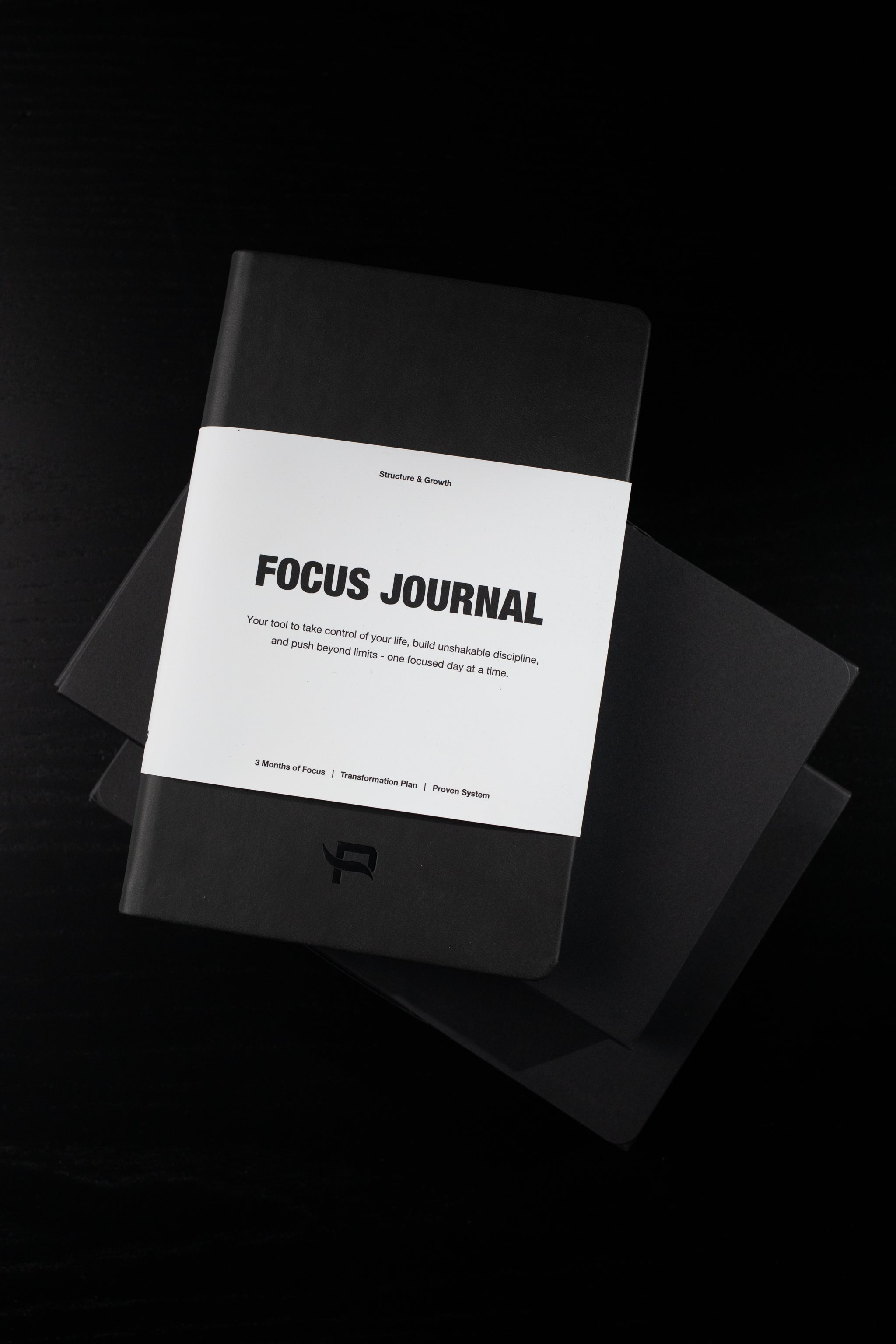
The PrimeFlow Focus Journal was built to solve exactly the problem above.
No gratitude prompts. No mood wheels. No "what does success look like to you" reflections that have no bearing on the current Tuesday.
Daily top-three priorities. Evening reflection. Weekly review. 90-day framing. A5, lay-flat, 100gsm paper that holds ink properly and doesn't bleed through. Vegan leather softcover that doesn't look like a school notebook.
It's designed for the man who already knows what he wants to build — and just needs a system that holds him to it. Every single day, for 90 days.

The PrimeFlow Focus Journal
90 days · Daily priorities · Weekly review · Evening reflection
A5 · Lay-flat · 100gsm · Vegan leather softcover · €37
Get Your Journal — €37 →