The Evening Routine Most Men Skip (And Why It Matters)
Everyone talks about morning routines. Almost nobody talks about what happens at the end of the day.
That's the problem. Because the morning routine doesn't determine how your day goes. The night before does.
The man who ends the day with a clear head, a reviewed plan, and tomorrow's priorities already written is not the same man as the one who closes his laptop at midnight, checks his phone one last time, and hopes tomorrow is better. The difference isn't talent or willpower. It's the 10 minutes most men skip.
Why the Evening Is the Most Underused Part of Your Day
Most productivity frameworks are front-loaded. They assume the morning is where leverage lives — the early alarm, the cold shower, the journaling, the no-phone rule. All of that is real. But morning routines are reactive to how you ended the night before.
If you ended yesterday scattered, overstimulated, and with no plan, your morning starts from zero. You wake up and spend the first thirty minutes figuring out what to do — burning the most cognitively clear time of your day on administration.
If you ended yesterday with a five-minute reflection and a clear list of tomorrow's three priorities, your morning starts from a known position. No figuring out. Just execution.
The evening routine is the prep. The morning routine is the performance.
What Most Men Do Instead
The default end-of-day routine for most men looks like this: finish work (or stop trying to work), pick up the phone, scroll for twenty minutes that turn into an hour, eat something while half-watching something, go to bed later than planned, lie awake for a while, and sleep poorly.
The next morning they wake up slightly depleted, reach for the phone to check what they missed, and repeat. Each evening feeds directly into the next morning's baseline.
An unstructured evening doesn't just waste tonight. It degrades tomorrow.
What a 10-Minute Evening Routine Actually Looks Like
You don't need a complicated protocol. You need a short, consistent practice that closes the day cleanly and opens the next one clearly.
Five minutes of reflection: what did you accomplish today, what didn't get done and why, one thing that would have made the day better. This is not journaling as therapy. This is data collection. You're building a record of patterns — what eats your time, what blocks your progress, what conditions produce your best work.
Three minutes of preparation: write tomorrow's top three priorities. Not a to-do list — three items, ranked by impact. The most important task goes first. When you wake up, the decisions are made.
Two minutes of shutdown: close everything. The laptop goes away. The journal closes. This is a physical ritual that signals to your brain the work day is over. Without a clear shutdown signal, your brain keeps running background threads on unfinished tasks all evening and into sleep.
5 Rules for an Evening Routine That Changes Your Mornings
1. Run it at the same time every evening.
Consistency requires a trigger. Pick a time — 9:30 PM, 10 PM — and treat it as non-negotiable. The first week you'll forget or skip it. By week two, the time itself becomes the trigger. You'll feel incomplete without it.
2. Keep it under 10 minutes.
Elaborate evening routines collapse the same way elaborate morning routines do. Your willpower at 10 PM is lower than at 7 AM. Make the bar low enough to clear every single night. The full version is ten minutes. The minimum version is three: write tomorrow's priorities, close the laptop.
3. Write the reflection before the phone comes out.
The phone is the enemy of honest reflection. Once you're in the feed, the day disappears. Do the five-minute reflection while the day is still accessible — before you scroll, before you switch off. You'll have sharper data and better priorities.
4. Make "tomorrow's priorities" the last thing you write.
Everything else in the evening reflection is retrospective. The priorities page is the one forward-facing element. Ending with that page — pen down, journal closed — means the last intentional act of your day was an act of direction. That matters psychologically.
5. Read the priorities again first thing in the morning.
Open the journal to yesterday's priorities page before you do anything else. You wrote them with last night's clarity. Morning-you gets to execute instead of plan. This 30-second habit is the bridge between the evening routine and a focused morning.
Want the full system in one place?
I put together a free guide — 7 rules that replace motivation with structure. The foundation behind everything on this blog.
Get the Free Guide →The Loop That Most Men Leave Open
Every unreviewed day is a missed learning. Every unplanned tomorrow is a morning wasted on administration.
The evening routine closes the loop. It captures what the day taught you and uses that clarity to set the next day's direction. Done consistently, it compounds — each day informed by the last, each week tighter than the previous.
Ten minutes at the end of the day to make the next day better. Most men scroll instead.
Don't be most men.

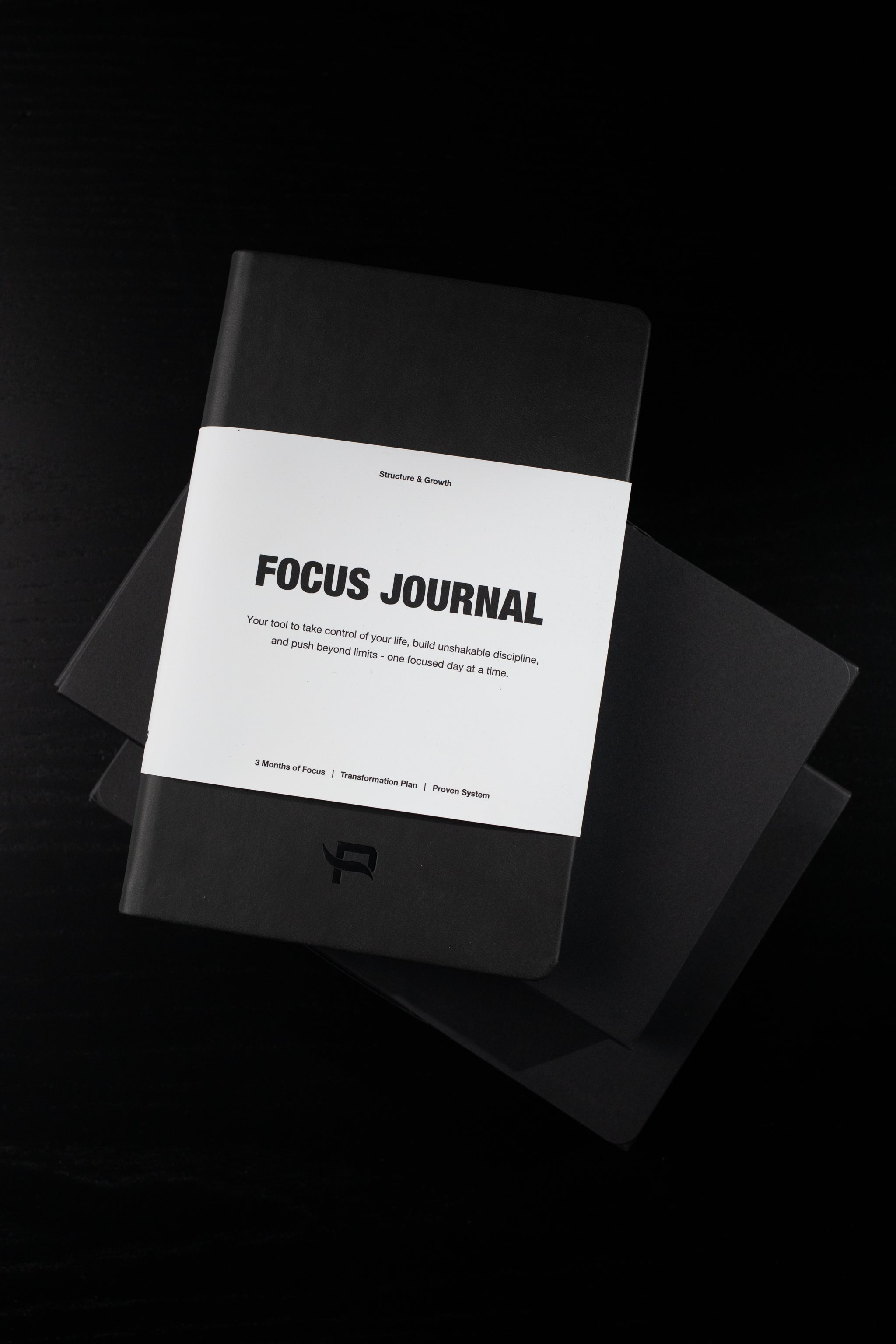
The PrimeFlow Focus Journal
90 days · Daily priorities · Weekly review · Evening reflection
A5 · Lay-flat · 100gsm · Vegan leather softcover · €37
Get Your Journal — €37 →