How to Build a Morning Routine That Actually Sticks
You've built a morning routine before. Probably more than once.
You set the alarm earlier. Planned the workout, the journaling, the no-phone rule. Maybe you held it for a week, maybe two. Then something disrupted it — a late night, a stressful week, a single Monday where you hit snooze — and the whole structure collapsed. That's why building habits that last requires a different approach.
That's not a willpower problem. That's a design problem.
Why Most Morning Routines Don't Last
The standard advice treats morning routines like motivation projects. You build hype around a new system, ride the novelty wave for a few days, and then crash when the feeling wears off.
Novelty is not a foundation. Dopamine spikes when something is new and fades when it becomes familiar. If your routine depends on feeling energized about it, it will break the moment life gets hard — and life always gets hard.
The other failure mode is overbuilding. Forty-five minutes of journaling, breathwork, cold shower, reading, and meditation sounds impressive on paper. But complex routines are fragile. One disruption and the whole morning falls apart.
The Default Always Wins
Here's what most men don't realize: you already have a morning routine. It's just not the one you want.
Without a structured system, the default kicks in — check the phone, scroll for a few minutes that turn into twenty, react to whatever hits first. The algorithm decides how you start your day, not you.
The goal isn't to add more to your morning. It's to replace the default with something that serves you before the world demands anything from you. That requires structure, not motivation.
What a Discipline-Based Morning Routine Looks Like
The most durable morning routines share three properties: they are short, they are non-negotiable, and the first action requires zero decision-making.
Short means 30–45 minutes maximum. Long enough to do real work. Short enough to survive a disrupted night.
Non-negotiable means the routine runs regardless of mood. On the days it feels hard, you do the minimum version — but you do it. The streak itself becomes the structure.
Zero decision-making at the start means the first action is automatic. You don't decide whether to journal. You just open the book and write three priorities. The decision was already made the night before.
5 Rules for a Morning Routine That Holds
1. Design it the night before, not in the moment.
Decision fatigue is real. The man who wakes up without a plan will default to whatever requires least effort. Write your three priorities before you sleep. When you wake up, the first 30 minutes are already structured. You don't think — you execute.
2. Start with one anchor habit, not five.
Pick the single action that sets the tone: writing your priorities, brewing coffee and sitting without a screen, five minutes of silence. Everything else is optional. The anchor habit is not. Build the rest of the routine around it only after the anchor is solid.
3. Protect the first 90 minutes from your phone.
The moment you check your phone, your morning belongs to someone else's agenda. Notifications, emails, messages — every one of them is a reactive task. Keep the first 90 minutes strictly output-only. Read. Write. Train. Think. Inputs come later.
4. Make the minimum version explicit.
Every routine needs a "compressed" version for hard days — 10 minutes instead of 45. Write it down. When a bad night or a travel day hits, you don't abandon the routine. You run the minimum. Consistency over the minimum beats perfection over the full version every time.
5. Track the streak, not the quality.
Don't grade your morning. Don't ask whether it was good or productive or perfect. Ask one question: did I show up? A checkmark in your journal is a data point. A week of checkmarks is a pattern. A pattern held long enough becomes identity.
Want the full system in one place?
I put together a free guide — 7 rules that replace motivation with structure. The foundation behind everything on this blog.
Get the Free Guide →The Routine That Runs on Discipline
A morning routine built on motivation will always be fragile. It works when you feel good, fails when you don't. That's not a routine — it's a best-case scenario.
A morning routine built on structure runs independent of how you feel. The night before's preparation does the heavy lifting. The anchor habit provides the ignition. The minimum version covers the hard days.
Stop trying to feel motivated in the morning. Build a structure that doesn't require it. That's the difference between a routine that lasts two weeks and one that lasts two years.

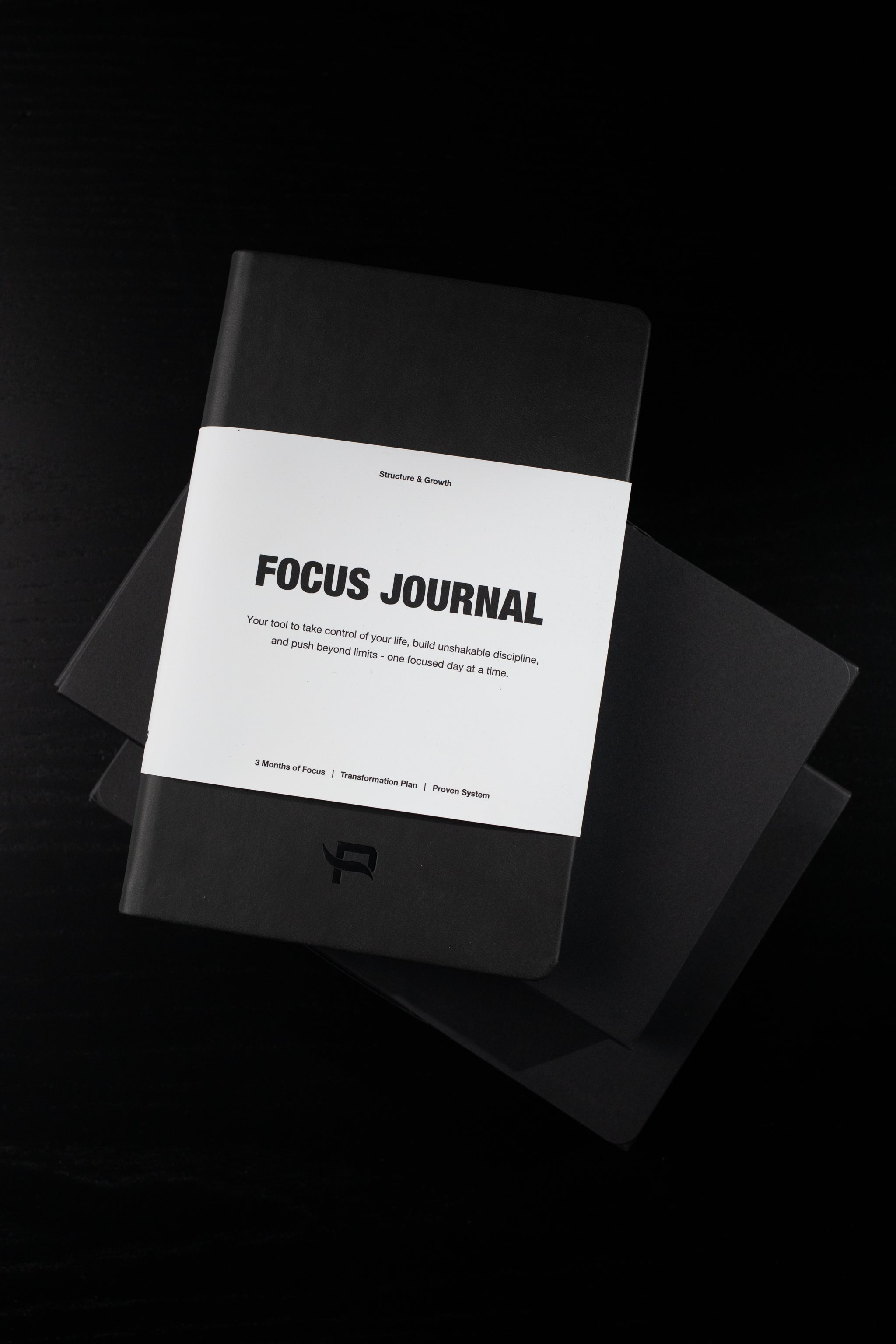
The PrimeFlow Focus Journal
90 days · Daily priorities · Weekly review · Evening reflection
A5 · Lay-flat · 100gsm · Vegan leather softcover · €37
Get Your Journal — €37 →