How to Build Daily Habits That Actually Last
Week one always works. That's the easy part.
The novelty is there, the motivation is fresh, and the gap between who you are and who you want to be feels small enough to close. Then week three arrives — the novelty is gone, life has complicated things, and the habit you were building quietly drops out of your days.
This isn't a discipline failure. It's a design failure. Here's the framework that changes it.
Why Habits Break in Week Three
Habit research consistently shows the same pattern: most new habits survive the first 14 days on novelty alone. The dopamine response to something new carries you through the initial friction.
Then familiarity sets in. The habit is no longer new — it's just a task you now have to do before you get to do what you actually want. Without novelty, the old patterns reassert themselves. The default behavior — whatever you were doing before — is deeply grooved and requires no effort. The new habit is still shallow and requires deliberate activation.
Most men interpret this drop-off as personal failure and abandon the habit. The reality is they just hit the phase every habit passes through — and quit one week too early.
The Three Failure Points of Habit Building
There are three specific moments when habits die. Understanding them is the first step to surviving them.
The first is the disruption. A sick day, a travel week, a single missed morning. If the system doesn't have a "missed day" protocol, one disruption breaks the pattern and restarts the clock — often indefinitely.
The second is the complexity trap. Men build habits that are too elaborate from the start. A 45-minute morning stack of seven behaviors isn't a habit — it's a project. Projects require planning and energy. Habits should be automatic. Simpler habits survive longer.
The third is the lack of feedback. When you can't see your streak, can't measure progress, and have no external reference point, the habit feels like it's going nowhere. Invisible progress feels like no progress.
The Structural Framework for Habits That Hold
Build habits in three stages: install, stabilize, and stack.
Install means starting with the minimum viable version — small enough that it requires almost no effort. Consistency is built through architecture, not willpower. Five minutes of journaling, not thirty. Ten push-ups, not a full workout. The goal in the install phase is to make showing up the entire success criteria. Quality is irrelevant. Presence is everything.
Stabilize means reaching 21 consecutive days with the minimum version before expanding. Most men skip this phase. They feel good after a week and immediately scale up. Scaling before the habit is stable guarantees collapse at the next disruption.
Stack means adding the full version or secondary behaviors only after the foundation is stable. The habit now has roots. You can build on it without it falling over.
5 Rules for Daily Habits That Actually Last
1. Start smaller than you think you need to.
The habit you can maintain on your worst day is the habit that lasts. If journaling for 20 minutes feels like the right amount, start with 5. Once the behavior is automatic, 20 minutes will come naturally. Starting too ambitious is the single most common reason habits fail.
2. Use habit stacking — anchor new habits to existing ones.
Every existing behavior in your day is an anchor point. "After I make coffee, I write three priorities." "After training, I log the session and set tomorrow's top task." The existing behavior triggers the new one without requiring you to remember or decide.
3. Make breaking the habit harder than doing it.
Your journal should be on your desk — already open. Your running shoes should be by the door. The less accessible the escape route, the more likely you are to execute. Friction kills habits. Remove it aggressively.
4. Never miss twice in a row — without exception.
One missed day is a blip. Two starts a new pattern. Three is a relapse. Adopt the "never miss twice" rule as a hard constraint. If you miss a day, the only task that matters tomorrow is showing up — at minimum, in the compressed version.
5. Track visually and review weekly.
A simple checkmark in your journal each day creates a visual streak. Protect the streak. The weekly review is where you assess honestly: what held, what broke, what the next week needs to reinforce. Without review, you repeat the same failures.
Want the full system in one place?
I put together a free guide — 7 rules that replace motivation with structure. The foundation behind everything on this blog.
Get the Free Guide →What Habits Look Like When They're Actually Built
After 90 days of a stable habit, something shifts. You stop requiring yourself to remember it. You stop debating whether to do it. It becomes part of the day the same way brushing your teeth is part of the day — neutral, automatic, non-negotiable.
That's the goal. Not motivation. Not willpower. Just a behavior so embedded in the structure of your day that skipping it creates friction.
Get through week three. Most men never do. The ones who do often hold the habit for years.

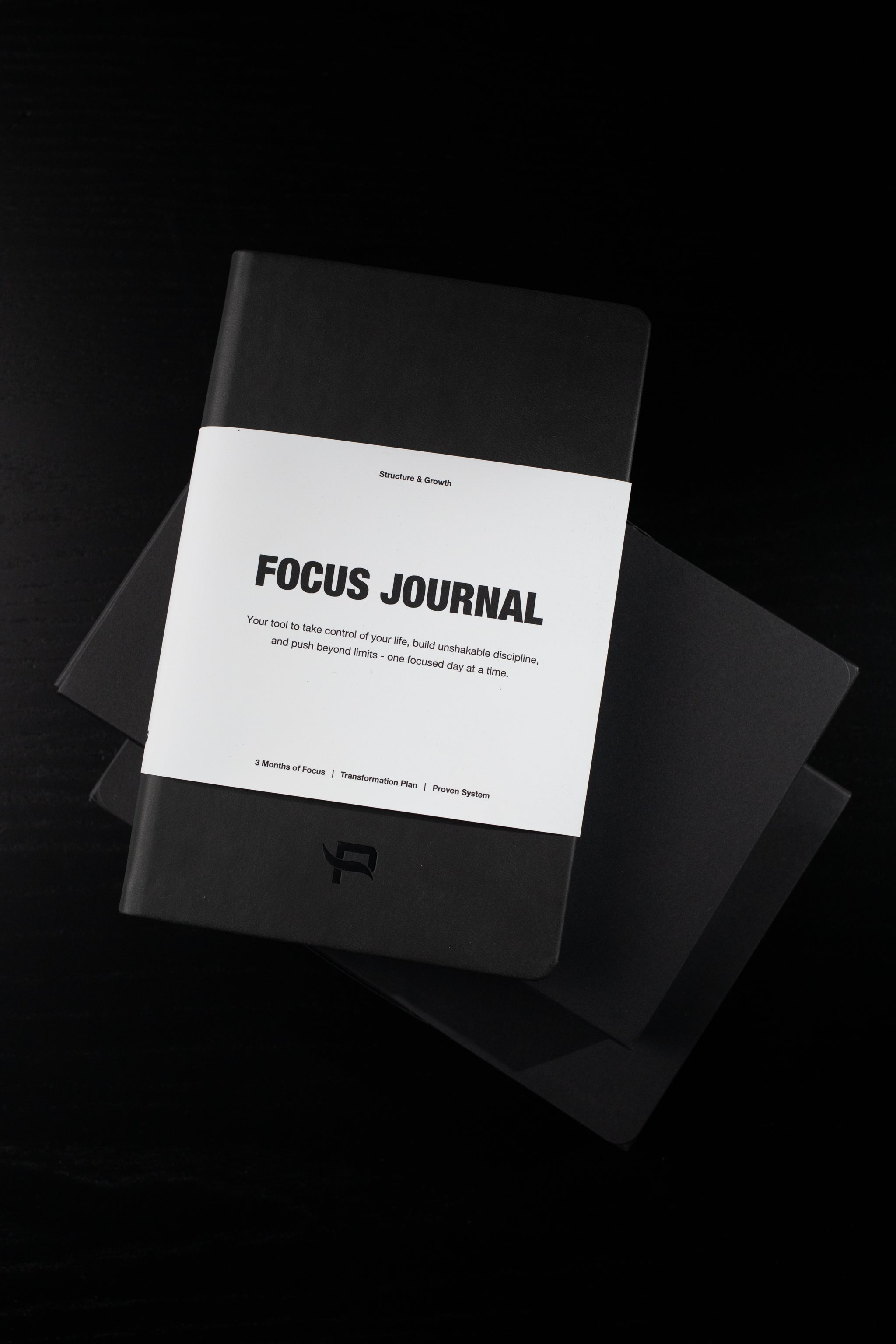
The PrimeFlow Focus Journal
90 days · Daily priorities · Weekly review · Evening reflection
A5 · Lay-flat · 100gsm · Vegan leather softcover · €37
Get Your Journal — €37 →