Why Writing by Hand Still Matters: The Case for Analog in a Digital World
Share
We live in a world of frictionless input.
Typing is fast. Apps are smart. Everything syncs instantly.
Yet something is missing.
The men who perform consistently — who think clearly, plan deliberately, and follow through — often share one habit that doesn't look like optimization at all.
They write by hand.
Not because they're nostalgic. Not because they distrust technology. But because analog writing does something no app can fully replicate.
---
The Brain Processes Handwriting Differently
When you type, your brain offloads.
Speed takes over. Words flow without resistance. The cognitive effort is minimal.
When you write by hand, your brain engages.
You slow down. You summarize. You choose words deliberately.
Research from Princeton and UCLA confirms this: students who handwrote notes retained more than those who typed — even when the typed notes were more complete.
The act of writing forces encoding. You don't just record information. You process it.
That's the difference between storing and understanding.
---
Clarity Is a Product of Slowness
Clarity doesn't come from more information.
It comes from less noise.
Writing by hand is slow — and that's exactly the point.
When you sit down with a pen and a blank page, there are no notifications. No tabs. No algorithm suggesting what comes next.
Only your thoughts.
That friction — the slight resistance of putting words on paper — creates space for thinking that digital tools often eliminate.
The men who write their goals by hand don't just record them. They commit to them.
The physical act makes priorities visible. Tangible. Real.
---
Analog Writing as a Cognitive Reset
Most men spend their days inside reactive systems.
Email. Messages. Notifications. Meetings.
The brain never fully shifts from receiving to thinking.
Analog writing breaks that loop.
Taking five minutes in the morning to write three priorities isn't productivity theater. It's a cognitive reset. A moment where the brain moves from reactive mode to intentional mode.
The page doesn't pull your attention elsewhere. It holds it.
And that focused state — even briefly — creates a different quality of thought.
---
Consistency Becomes Visible
One of the most underrated benefits of analog writing is the physical record it creates.
When you write in a journal daily, you can see the weeks add up.
Filled pages. Tracked habits. Completed plans.
That visibility matters.
Digital streaks are easy to reset. A filled journal page is permanent.
It builds something more valuable than data: it builds evidence.
Evidence that you showed up. That you followed through. That you're the kind of man who does what he plans.
Over 90 days, that evidence compounds into identity.
---
The Problem With Pure Digital Planning
Digital tools optimize for speed, not depth.
They're excellent for storing, sharing, and automating.
But for reflection, clarity, and commitment — they introduce more friction than they remove.
Every app carries the weight of everything else on the device.
Open your notes app and you're one swipe away from distraction.
A journal is different. Its only function is the one you give it.
That simplicity isn't a limitation. It's a feature.
---
The Structure That Makes It Work
Analog writing only works when it has structure.
A blank journal with no framework often leads to inconsistency — or abandonment.
The most effective system combines:
· A clear daily structure (What are today's three priorities?)
· A short evening reflection (What actually happened?)
· A weekly overview (Am I on track with what matters?)
· A 90-day focus cycle (What am I building toward?)
Structure turns analog writing from a vague idea into a reliable system.
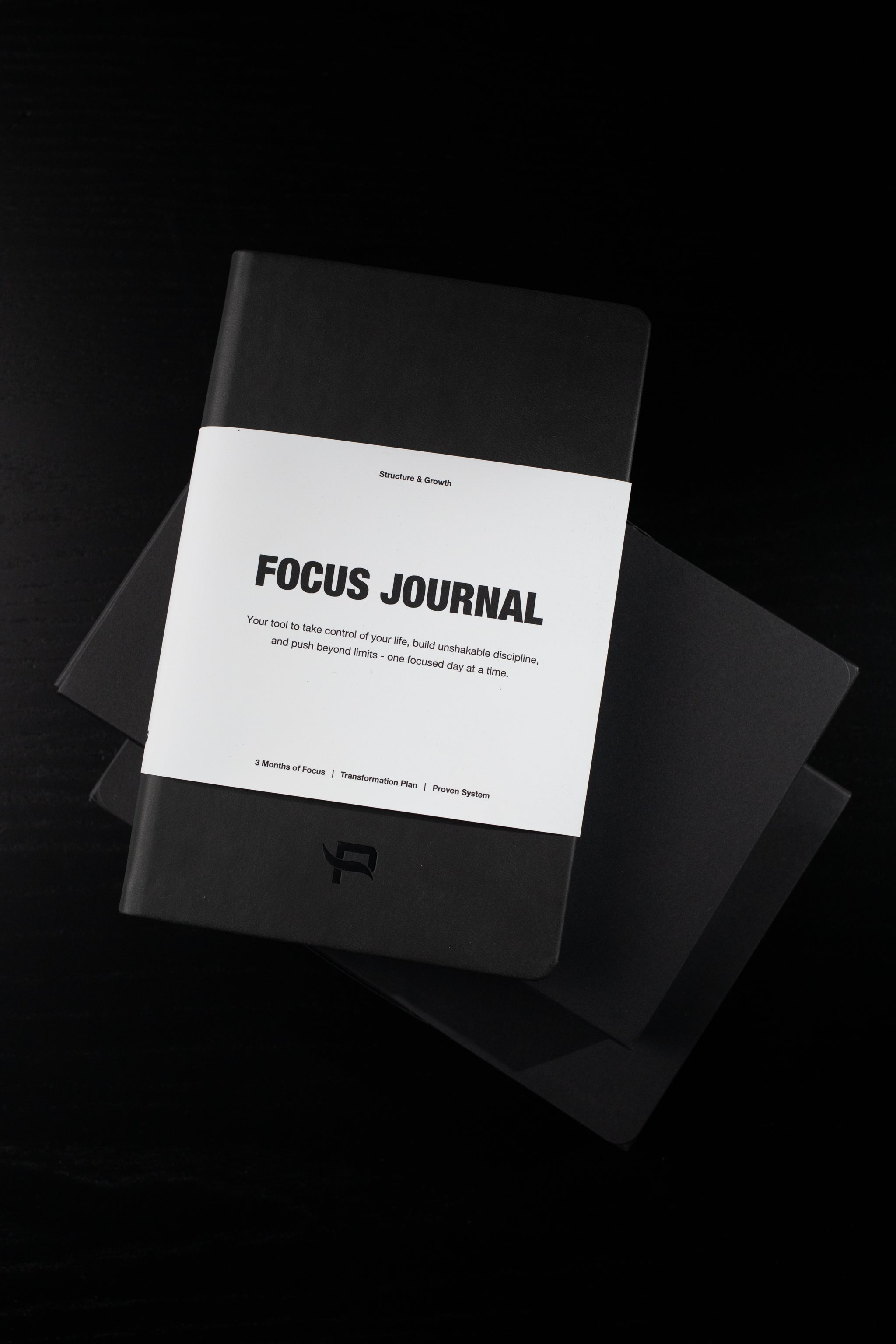
That's why the PrimeFlow Focus Journal was built the way it was.
Not as a blank notebook. But as a framework — one that guides without restricting, and structures without controlling.
---
The Quiet Edge
In a world optimizing for speed, depth creates separation.
Writing by hand won't make you faster.
It will make you clearer.
Clearer about what matters. More consistent in pursuing it. More aware of where your time and energy actually go.
The men who do this — quietly, daily, without performance — build something that compounds.
Not motivation. Not hacks.
Clarity. Structure. Identity.
And that's worth more than any app.
Keep reading: Focus & Distraction
- Why You Lose Focus (And How to Fix It for Good)
- The Dopamine Detox Journal: Reset Your Focus in 7 Days
- How to Stop Procrastinating for Good
- Why Exercise Improves Focus — And How to Use It Daily
- Why Motivation Doesn't Work — And What Actually Does
All guides in one place: The PrimeFlow Guide Library · What real customers say: PrimeFlow reviews