Why You Lose Focus (And How to Fix It for Good)
You sit down to work and ten minutes later you're somewhere else.
Not because the task was hard. Not because you were tired. Just because a notification appeared, a thought surfaced, and you followed it. By the time you find your way back to the original task, fifteen minutes are gone and the momentum is broken.
This is happening to you multiple times per day. And it has nothing to do with discipline.
The Real Reason You Can't Stay Focused
Your attention didn't break. It was stolen.
Modern smartphones deliver an average of 80 to 100 notifications per day. Every ping is a small dopamine hit — unpredictable, immediate, low-cost. Your brain has been trained by thousands of these interactions to constantly scan for the next stimulus. Sustained attention on a single difficult task is, by contrast, slow, uncertain, and unrewarding in the short term.
You're not competing with a task. You're competing with an algorithm designed by engineers whose entire job is to prevent you from looking away. Of course you lose focus. The system is built to ensure it.
Why "Just Focus Harder" Doesn't Work
Telling yourself to focus harder is like trying to outmuscle gravity. You can hold it for a while with enough effort. But the moment your willpower dips — which it will, because willpower is a finite resource — the pull of distraction wins again.
The men who maintain deep focus for hours aren't more disciplined than you in the moment. They've built a system that removes the competition entirely. The phone isn't within reach. The browser tabs aren't open. The decision to focus was made in advance, under conditions of clarity, not under the pressure of a distracted state.
Focus is not a character trait. It's an engineering problem.
How to Build Uninterruptible Focus Blocks
Deep focus requires two things: a defined window of time and a sterile environment.
A defined window means you decide in advance — before you open your laptop — when you will do deep work and for how long. 60 to 90 minutes is the optimal range for most people. Block it. Name it in your journal. Treat it like a meeting you cannot cancel.
A sterile environment means eliminating every input that isn't the current task. Phone in another room. Notifications off. Only the tools the task requires open. One browser tab, not nineteen.
The combination of a defined window and a sterile environment makes focus the path of least resistance. There's nothing else to do but work. That's when real output happens.
5 Rules to Reclaim Your Focus
1. Define your deep work window the night before.
Don't decide when to focus in the morning. Write it down the night before: "Deep work — 8:00 to 9:30 AM." When you wake up, the window is already set. You don't negotiate with yourself, you execute the schedule.
2. Phone out of the room — not on silent, out of the room.
Silent still means available. The brain knows the phone is there and continues to scan for it. Physical distance is the only reliable solution. Put it in another room before your deep work window starts. This single change adds 30–40 minutes of actual output per day for most men.
3. Work with a single task visible.
Before you start, write one sentence at the top of the page: "Right now I am working on X." One task. When the mind drifts, you return to that sentence. It's the anchor. Clear direction is a prerequisite for sustained attention.
4. Write down distracting thoughts instead of following them.
When a thought surfaces — an errand, an email you need to send, something you just remembered — write it in a capture list and keep working. Don't follow the thought. Write it down, dismiss it, and return. The capture list empties your working memory without breaking the session.
5. Review your focus blocks in your evening journal.
At the end of the day, write: how long was the actual deep work window? What broke it? What could tomorrow's environment look like to remove that trigger? Iterate weekly. Most men's focus capacity doubles within two to three weeks of deliberate review and adjustment.
Want the full system in one place?
I put together a free guide — 7 rules that replace motivation with structure. The foundation behind everything on this blog.
Get the Free Guide →The Man Who Controls His Attention Controls His Day
Attention is the most valuable resource you have. Every hour of directed focus compounds. Every hour of fragmented, reactive work costs more than you realize — not just in the lost time, but in the reset cost each time you try to re-enter deep work.
The good news: this is not a character problem. It's a design problem. Build a system that makes distraction inconvenient and focus easy. Then show up to the system every morning.
Your focus isn't broken. It's just been in the wrong environment.

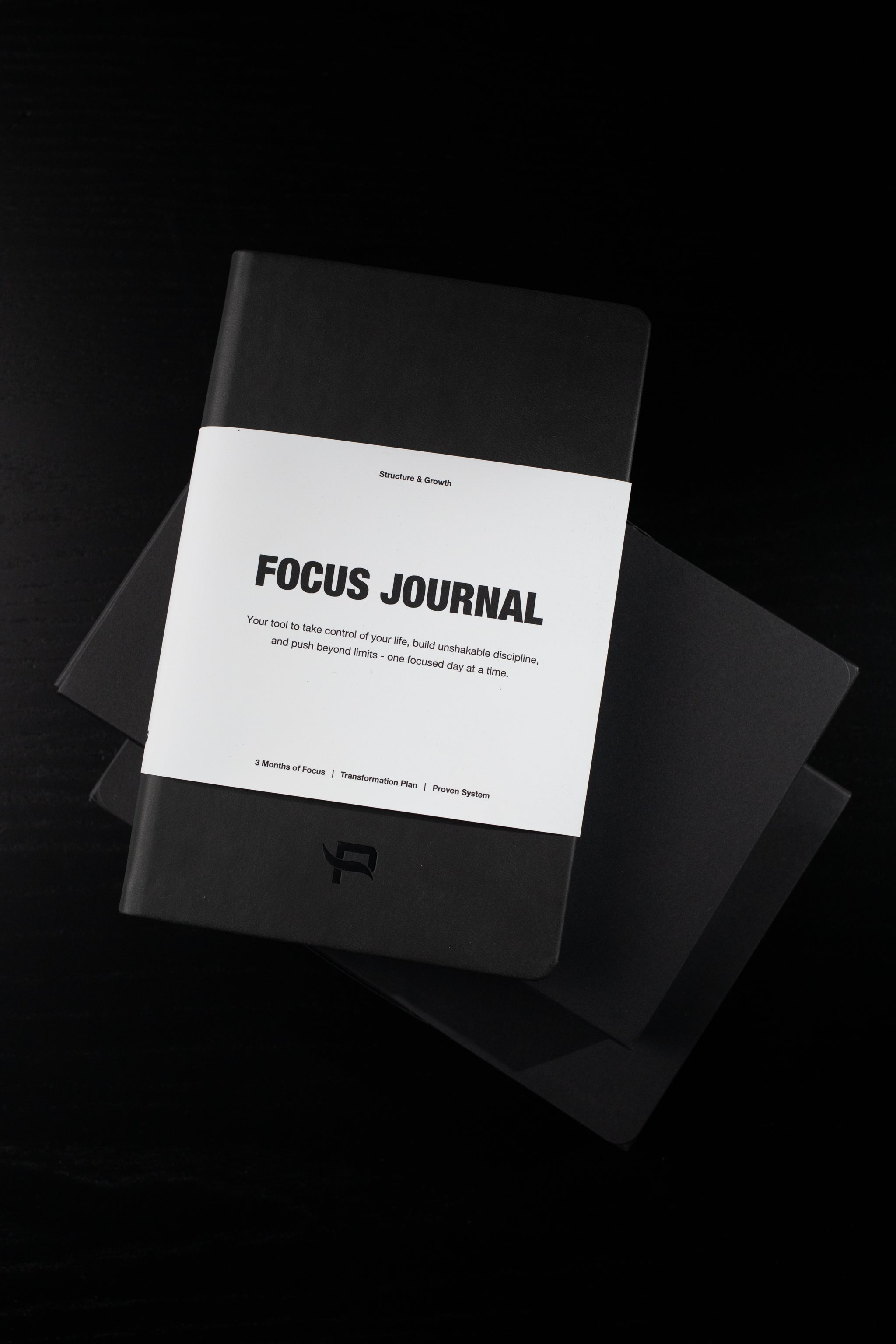
The PrimeFlow Focus Journal
90 days · Daily priorities · Weekly review · Evening reflection
A5 · Lay-flat · 100gsm · Vegan leather softcover · £32 / €37
Get Your Journal — £32 / €37 →Losing focus at work: quick answers
Why do I keep losing focus at work?
Because your environment is built for interruption. Notifications, open tabs and a phone on the desk train your brain to look for the next stimulus. It is a design problem, not a character flaw.
How do I get my focus back quickly?
Remove the trigger first, then pick one task. Phone in another room, one tab open, and a single written priority for the next 60 minutes. Focus returns faster when there is only one thing to return to.
Is losing focus a sign of ADHD?
Not necessarily. Most men who lose focus are overstimulated, not ill. If focus problems affect every part of your life and nothing changes after you fix your environment, talk to a doctor.
How long does it take to rebuild focus?
Most men notice a difference within two to three weeks of a fixed structure: three priorities each morning, one deep work block, and a short review in the evening.
Keep reading: Focus & Distraction
- The Dopamine Detox Journal: Reset Your Focus in 7 Days
- How to Stop Procrastinating for Good
- Why Writing by Hand Still Matters: The Case for Analog in a Digital World
- Why Exercise Improves Focus — And How to Use It Daily
- Why Motivation Doesn't Work — And What Actually Does
All guides in one place: The PrimeFlow Guide Library · What real customers say: PrimeFlow reviews