The Structured Journal System That Builds Real Consistency
You know the feeling. You open the journal, write something vague — "be more productive today" — and close it. Nothing changes.
The problem was never the journal. The problem was the absence of a system.
Why Most Men Quit Journaling After One Week
Most men approach journaling the same way they approach motivation: they do it when they feel like it, write what comes to mind, and hope the habit sticks. It doesn't.
Without structure, journaling is just thinking on paper — and thinking without a framework loops. You surface the same frustrations, the same vague goals, the same half-formed plans. Week one feels insightful. Week two feels repetitive. Week three, the journal stays closed.
The problem isn't consistency. It's that nothing in the system is producing results worth showing up for. You don't continue a habit that leads nowhere.
The Mistake That Keeps Most Journals Empty
There's a version of journaling sold as self-care: gratitude lists, free-writing, stream-of-consciousness reflection. It has its place. But for men trying to execute on a goal, it's the wrong tool.
Gratitude journaling doesn't tell you what your three most important tasks are today. It doesn't help you identify why last week's plan fell apart. It doesn't build momentum — it builds mood. And mood is temporary.
What you need is a structure that converts intention into output. A format that removes the daily decision of what to write and replaces it with targeted prompts that move you forward. That requires a different system entirely.
The comparison is useful: no one goes to the gym and stares at the equipment hoping inspiration strikes. They follow a program. Your journal should work the same way.
What a Structured Journal System Actually Does
A structured journal system doesn't ask how you feel. It asks what you're going to do — and then holds you accountable to it.
The core loop is simple. Three priorities decided the night before. A daily start ritual that takes under two minutes. An evening review that identifies what worked and what didn't. A weekly review that checks progress against a 90-day target.
Nothing abstract. Nothing aspirational. Just decisions made in advance, executed, and reviewed.
When you build this loop into a physical journal, it becomes automatic — the structure drives the behavior, not willpower. The format does the thinking so you can focus on the doing. That's the shift that turns an unused journal into a daily anchor.
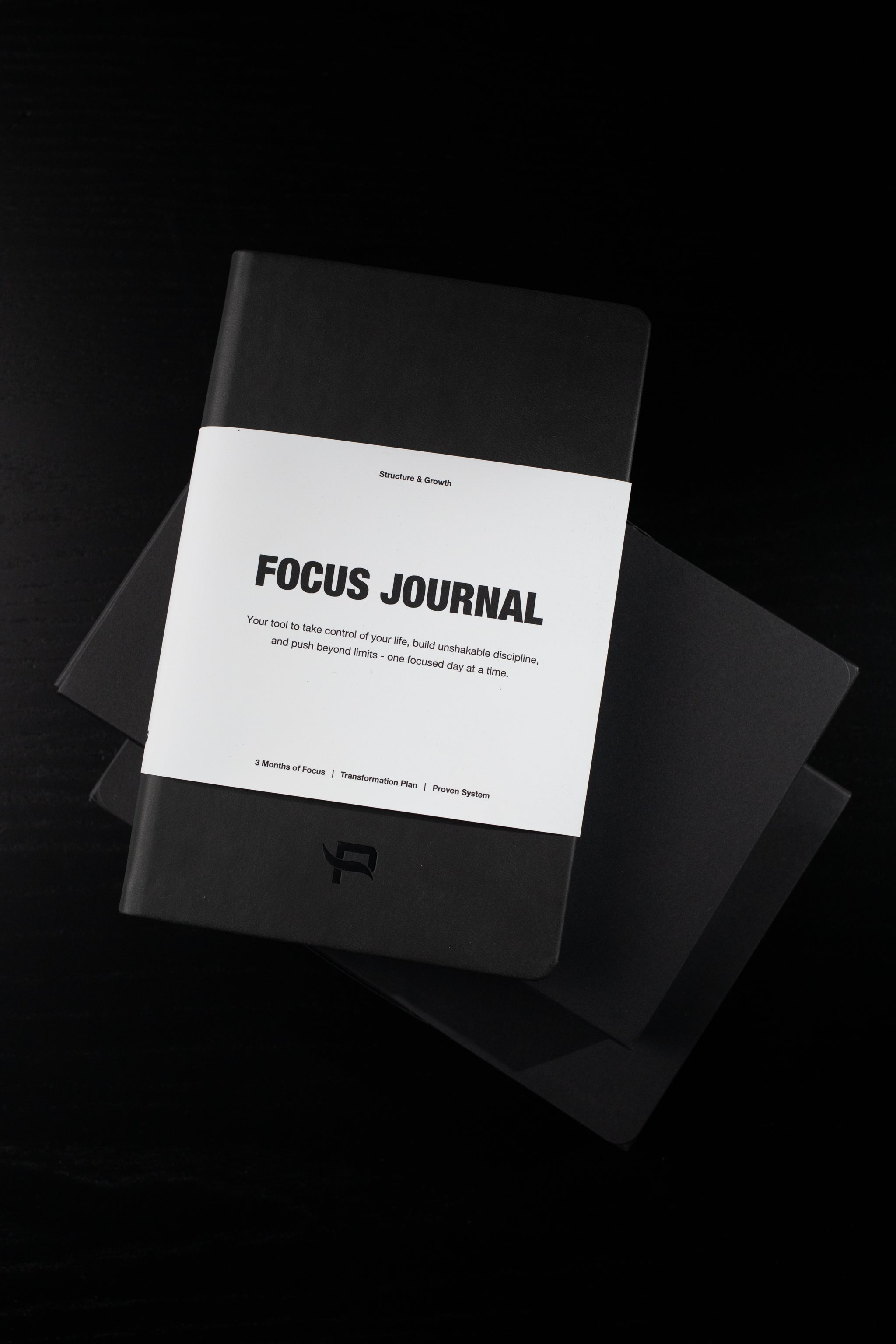
The PrimeFlow Journal is built around exactly this loop: 90 days, daily priority pages, weekly review prompts, and evening reflection built into the format. You don't figure out how to use it every morning. The structure is already there.
5 Elements of a Journal System That Actually Works
1. Fixed priority prompts — not blank pages.
A blank page requires you to decide what to write every single day. That decision costs mental energy before you've even started working. A structured prompt removes the friction. The format should ask one clear question: what are the three most important things today? Everything else is noise.
2. The night-before rule.
Your clarity is highest before you sleep, not after you wake up. Set your three priorities the night before. When you open the journal in the morning, the decision is already made — you execute, not deliberate. This single habit eliminates the loop that kills most mornings: lying in bed trying to figure out where to start.
3. A 90-day container.
Open-ended goals disappear into the background. 90 days is long enough to build real momentum and short enough that every week carries weight. Your journal should anchor to a 90-day target, so every daily entry connects to a specific outcome. Without this container, days accumulate without direction — you feel busy but never closer to the goal.
4. The evening review — not optional.
Most men only plan forward. They never look back. Without a brief evening review — what worked, what blocked progress, what tomorrow needs — the same mistakes repeat across different weeks. Five minutes at the end of the day compounds faster than any morning ritual. It's where the actual learning lives.
5. One notebook, no migration.
Digital note apps create endless reorganization: new apps, new systems, new tags, new folders. You spend more time organizing your thinking than executing it. A physical journal keeps you in the same place for 90 days. That continuity is where insight accumulates — seeing patterns across weeks, not starting fresh every month.
The Foundation of the System
I put the 7 core rules behind this structured approach into a free guide. It's the foundation behind every post on this blog — and the same methodology the PrimeFlow Journal is built on.
Get the Free Guide →The Journal That Sits Unused Is the Wrong Format, Not You
If your journal is collecting dust, the problem isn't a lack of discipline. It's that the format is asking you to do too much cognitive work every morning — and that friction compounds into avoidance.
A structured journal system removes that friction. The prompts are there. The direction is set. You show up and execute — the same way you'd follow a well-designed training program, except this one is for your focus and output.
Pair this with understanding why motivation doesn't work and you have the full picture: motivation gets you to open the journal once. Structure gets you to open it every day for 90 days.
When the format is right, you don't need to remember to journal. You miss it when you skip it. That's what a structured journal system actually builds — a daily standard you hold yourself to.

The PrimeFlow Focus Journal
90 days · Daily priorities · Weekly review · Evening reflection
A5 · Lay-flat · 100gsm · Vegan leather softcover · £32 / €37
Get Your Journal — £32 / €37 →Keep reading: Planning & Journaling
- The 90-Day Planning Method That Builds Real Momentum
- Best Journals for Men in 2026: 5 Options Compared Honestly
- Why Men Who Journal Outperform Those Who Don't
- The Best Productivity Journal for Men — What to Look For
- Why You Lose Focus (And How to Fix It for Good)
All guides in one place: The PrimeFlow Guide Library · What real customers say: PrimeFlow reviews