Why Exercise Improves Focus — And How to Use It Daily
Why Exercise Improves Focus — And How to Turn Training Into Clear Work Hours
You sit down to work and your brain won't settle. Five tabs, three half-thoughts, one phone that keeps pulling at you.
Then you train for 45 minutes, and the noise is gone. That's not a coincidence. Here's why exercise improves focus — and how to use it on purpose instead of by accident.
The Problem Isn't Your Attention Span
Most men who struggle to focus think something is broken. They think they lost the ability to concentrate somewhere between their first smartphone and their third job.
You didn't lose it. You buried it. Every notification, every scroll, every half-finished task leaves something behind. By midday your head is full of open loops, and nothing gets your full attention.
That's not laziness. That's overstimulation. And you can't think your way out of it, because thinking is exactly what's overloaded.
Why "Just Focus Harder" Never Works
The usual advice is mental: block apps, try a focus timer, drink more coffee, push through.
Those tools treat focus as a willpower problem. But you can't force a cluttered mind to be clear. Trying harder only adds pressure to a system that's already running hot. Coffee makes it louder. Timers make you watch the clock.
What you need isn't more effort in your head. You need to get out of your head completely, and the fastest way to do that is through your body.
Why Exercise Improves Focus
Training does three things no productivity app can do.
It forces a single point of attention. You can't scroll during a heavy set. You can't plan a meeting while you're sprinting. For 45 minutes, your body demands all of you. That's the one place most men still practice full attention every day.
It burns off the restlessness. A lot of what feels like "can't focus" is stored tension. Your body sat still all day while your mind ran at full speed. Hard physical work drains that pressure. You come out calmer, and calm is where focus lives.
It resets your brain's baseline. Research on exercise and concentration keeps pointing the same way: after a session of moderate to hard exercise, attention and memory get sharper for a few hours. More blood flows to the brain, and the constant background buzz quiets down. You're not more motivated after training. You're clearer.
This is why the men who train consistently often get more done in fewer hours. Not because they have more time. Because their hours are cleaner. If you've ever wondered why you lose focus at work, the answer is usually the same: too many inputs, not enough output — and nothing in your day that clears the slate.
Training Alone Isn't Enough
Here's what most fitness content misses. Exercise gives you a window of clarity. It doesn't tell you what to do with it.
Most men walk out of the gym with a clear head and then hand it straight back to their phone. Ten minutes of scrolling in the car, and the window is gone.
The clarity is the raw material. Structure is what turns it into output. That means knowing your top priorities before you train, so the clear hours after go to the work that matters, not to whatever pings first.
5 Rules to Turn Training Into Focus
1. Train before your hardest work, not after.
If your most important task needs deep focus, put a session in front of it. Morning training before a big work block is the simplest focus tool you have.
2. Write your top 3 priorities before you train.
Decide what the clear hours are for while you're still at your desk. When you walk back in, you don't plan. You execute.
3. No phone for the first 30 minutes after.
That post-training window is your sharpest time of the day. Don't spend it on messages and feeds. Protect it the same way you protect the first hour of the morning.
4. Don't skip the session when you're "too busy."
The days you feel too overloaded to train are the days you need it most. A short session beats no session. Twenty minutes still clears the noise.
5. Track both — training and focus.
Write down when you trained and how your work block went. After two weeks, you'll see the pattern in your own handwriting. That's proof you'll actually believe.
Want the full system in one place?
I put together a free guide — 7 rules that replace motivation with structure. The same foundation that makes training and focus work together.
Get the Free Guide →How This Fits a Real Week
You don't need a perfect routine. You need a simple one you'll repeat.
Three to four sessions a week, placed before your biggest work blocks. Top 3 priorities written the night before or before you leave for the gym. A short evening check: did I train, did I do the three things, what's next tomorrow.
That's it. One page a day. The training clears your head. The page tells your clear head where to go. If you keep falling off the plan, read how to stay consistent at the gym — the same structure applies to both.
Clear Body. Clear Mind.
Your brain wasn't built for 200 notifications a day. It was built to move, solve a problem, and move again.
That's why exercise improves focus. It gives your mind one thing to do and burns off everything else. Then structure makes sure the clear head you walk out with goes to the work that matters.
Train first. Write the three things. Then go to work with a quiet mind.

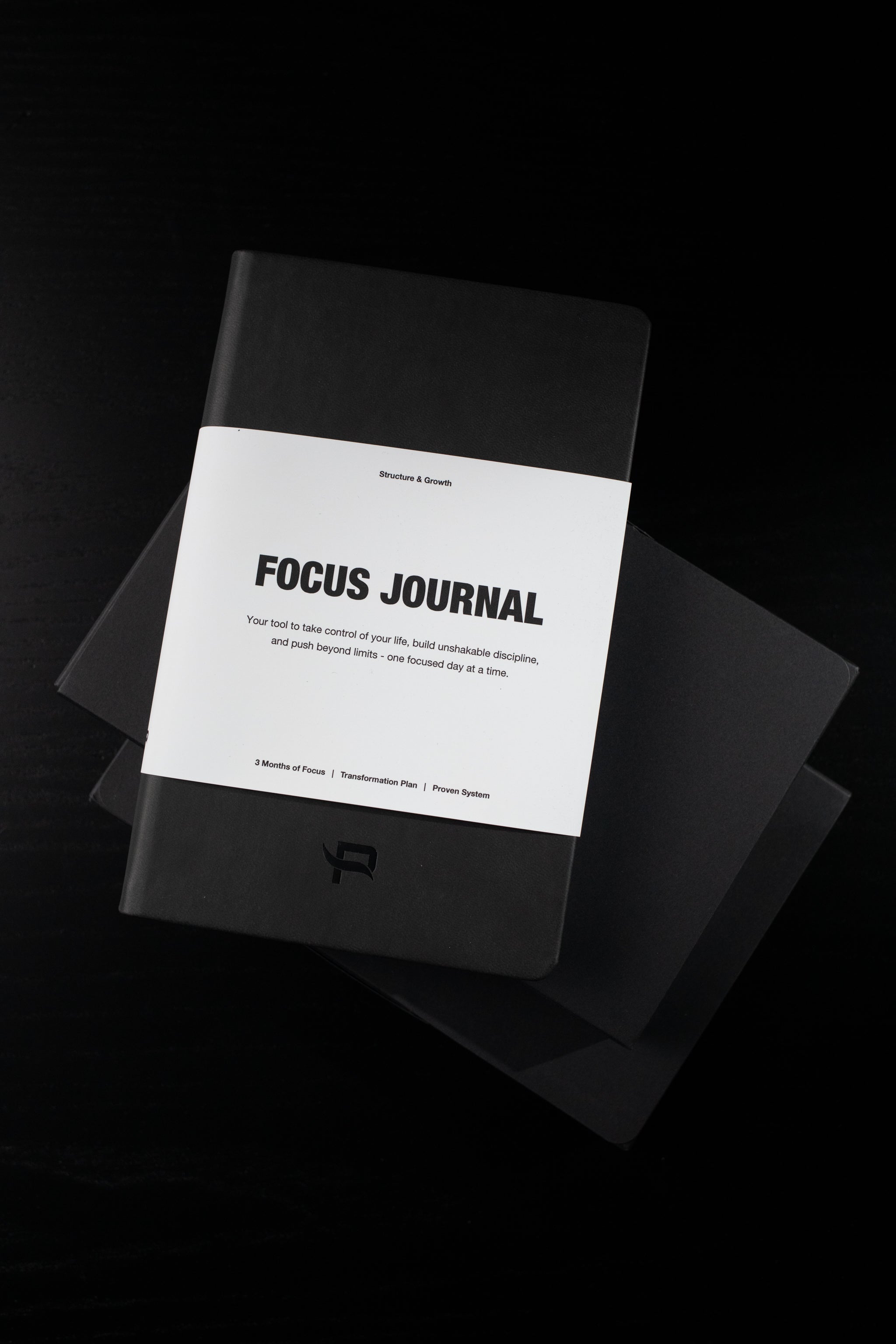
The PrimeFlow Focus Journal
90 days · Daily priorities · Habit tracker · Weekly review
A5 · Lay-flat · 100gsm · Vegan leather softcover · £32 / €37
Get Your Journal — £32 / €37 →Keep reading: Focus & Distraction
- Why You Lose Focus (And How to Fix It for Good)
- The Dopamine Detox Journal: Reset Your Focus in 7 Days
- How to Stop Procrastinating for Good
- Why Writing by Hand Still Matters: The Case for Analog in a Digital World
- Why Motivation Doesn't Work — And What Actually Does
All guides in one place: The PrimeFlow Guide Library · What real customers say: PrimeFlow reviews